How has the composing process changed after the introduction of AI in audio/music?
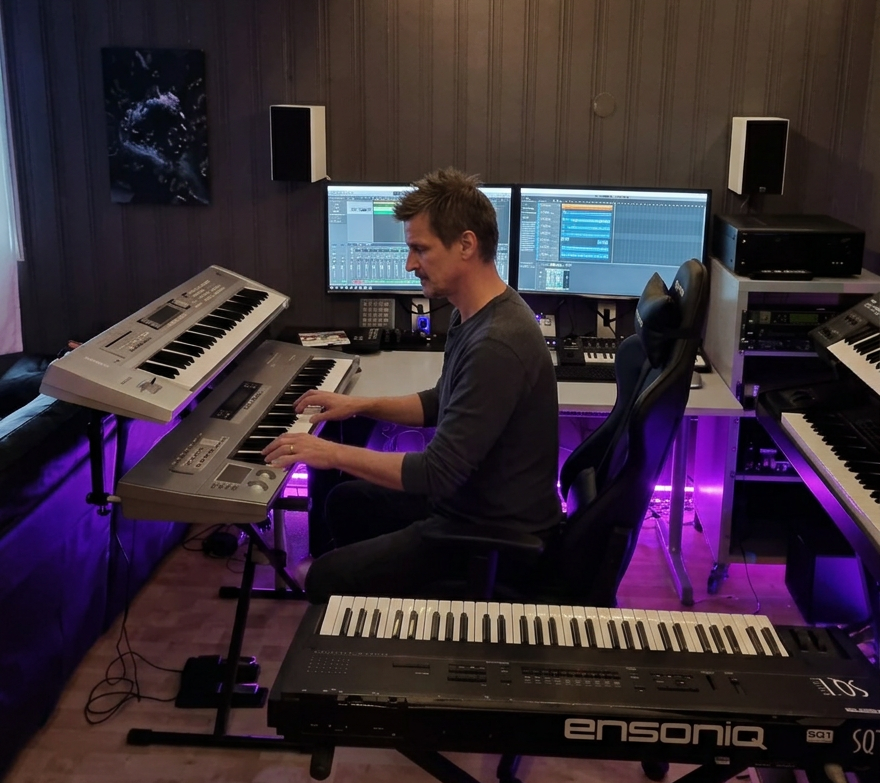
In the studio october 2021
How it all started
Back in the early 2000’s I was an avid user of the Sonar/Cakewalk DAW which gave me all the options I needed to move from workstation synthesizers and their sequencers to a computer based system with better overall control of the music creation process. I since switched to Cubase DAW which has better support and several more options including better utilisation of the go-to VST sampler “Native Instruments Kontakt” which can include a vast amount of plugins and sample libraries.
I have composed around 2500 unique compositions since around 1988 when I first started composing. Most of these are purely instrumental tracks in all sorts of genres. They are mostly jazzy, improvisational music, experimental techno like IDM, breakbeats and drum and bass, cinematic, ethnic and world music, in addition to orchestral and arranged symphonic music.
The introduction of AI technology
In late 2023 I started exploring AI audio/music tools such as Suno, Sonauto, Udio, Musicfy, Fadr, Kits and others realising they could greatly facilitate the creation of vocal tracks and lyrics. From then I have focused mostly on Ace Studio as the go-to tool for full control over musical notes through Midi data in the DAW.
To me AI audio and vocals are just a more modern way of working with samples, vocals, sounds and effects, exactly in the same way as we sampled music and vocal chops in the past. In my opinion AI has allowed composers with a lot more control of how we want vocals in our music by creatively controlling the vocals and improvise on vocal sounds and effects, hence retaining a lot more control of the end result. As I’m no lyrics writer whatsoever, I focus more on the sounds of the lyrics and the voice more than the actual lyrics themselves, which is evident in most tracks and remixes of tracks I did these past years.
“Beyond The Horizon” remixed with AI vocals
An example of my work process using vocals as the main foundation for a track is “Beyond The Horizon” originally composed in 2013. It was remixed in 2026 using Cubase and Suno Studio as the base for developing the vocal stems.
Listen to “Beyond The Horizon” on Youtube
The track is a very basic composition with a simple melody line, chords, bass, and drums and was never finished and never released. It remained in my harddisk “drawer” as one of hundreds of non-finished templates.
The foundation for the track is a basic 4/4 time signature in E-minor with a 68 bpm tempo.
Generate several attempts with simple vocal prompting, but including vocal characteristics, attitude and dynamics where possible, in addition to time signature, scale and tempo.
Add lyrics, usually I work with very little lyrics and fewer words like in this example. This makes it easier to control the timing and positioning of the vocal samples in the composition.
Extract the stems and clean up artifacts in Audacity or any audio tools to further manipulate the audio.
From the music output, import stems needed for the vocal track into the DAW.
Fully compose the new track in the DAW with vocal stems, effects, samples, VSTI and instruments.
The track is a ballad with a very simple chord progression and melody line, but with a very powerful vocal track.